Carpet Steam Cleaning

Hot-water extraction that lifts stains, dust and pet odours from every fibre.

  • Truck-mount and portable hot-water extraction
  • Pet-safe and child-safe solutions
  • Stain pre-treatment and odour removal
  • Tax receipt accepted by every Australian agency

Get a free fixed quote in 60 seconds

Fill in your details — we'll text you a quote and confirm via SMS to 0488841883.

Send via WhatsApp

Tapping "Send via SMS" opens your phone's messaging app with the quote pre-filled — just tap Send.

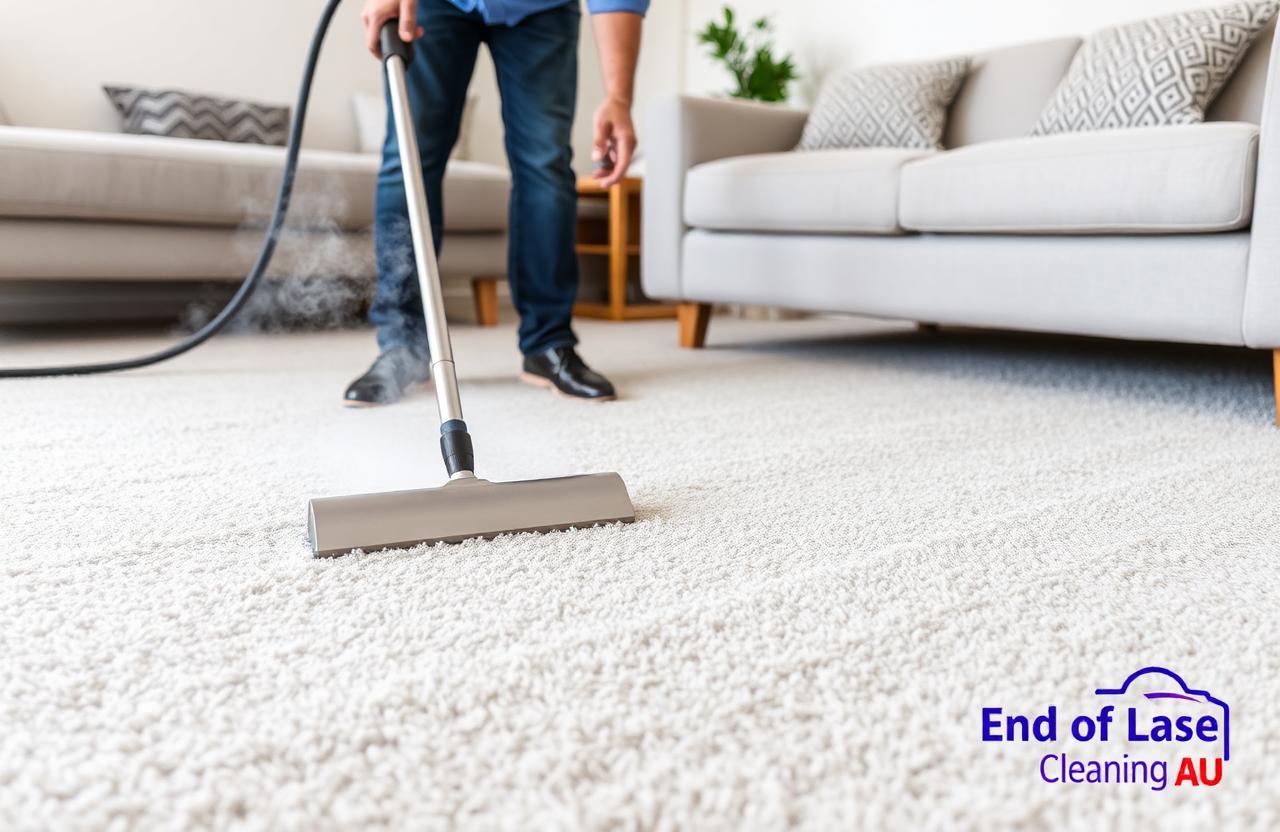
End of Lease Cleaning AU technician steam cleaning a light grey carpet in an Australian living room

Most Australian leases require professional carpet steam cleaning before you move out, and many ask for a paid receipt. Our carpet team uses truck-mount and portable hot-water extraction machines that inject hot water and a mild detergent deep into the fibres, then suck it back out along with the dirt, dust mites and old spills.

Before we start, we vacuum the whole carpet, move light furniture, and pre-treat heavy traffic lanes and visible stains. We use pet-safe and child-safe solutions on common marks like coffee, wine, ink, makeup, and pet accidents. For oily stains, we use a separate solvent so the spot does not return as a brown ring after drying.

Steam cleaning also kills the dust mites, bacteria and mould spores that build up in the underlay over time. Your carpet looks fresher, smells cleaner, and dries within 4 to 6 hours so the property can be inspected the same day or the next morning. We can also Scotchgard the fibres so future spills bead up instead of soaking in.

We bring our own water and power, so even if the property is empty and disconnected we can still complete the job. You will get a tax receipt that meets agent requirements in NSW, VIC, QLD, WA, SA, ACT, TAS and NT. If your agent is not happy with the carpets at the final inspection, we will return and re-steam them for free within 7 days as part of our Bond Back Guarantee.

Bond cleaning insight

How to remove bathroom mould before the final inspection

Black mould around shower silicone is the second-fastest way to lose bond in Australia, especially in older units with poor ventilation.

Bleach-based supermarket sprays bleach the colour out of the spores but leave the root structure embedded in the silicone — within 48 hours the black returns and the agent will see it on inspection day. The correct approach is to kill, not bleach. Apply a hydrogen-peroxide mould treatment (3–6% strength) directly onto wet silicone, cover with cling film to prevent evaporation, and leave overnight. The next morning, scrub with a stiff nylon brush and rinse. If staining persists, the silicone itself is dyed and the only fix is to cut it out and reapply — a $40 job from a handyman that saves a $250 bond deduction. While you're in the bathroom, descale the shower screen with a citric acid paste (one tablespoon citric acid powder in 100 ml warm water), leave for 15 minutes, then squeegee. This removes the cloudy soap-and-mineral film that inspectors spot from the doorway. Tap aerators get a separate soak in white vinegar for an hour to clear flow restrictors of limescale. Behind the toilet, around the base, and at the floor-wall junction are the three points agents always check for urine stains, hair, and dust — clean these on hands and knees with a 50/50 vinegar solution. Replace mouldy or warped shower curtains entirely; cleaning costs more than a $15 replacement. Open windows and run the exhaust fan continuously after cleaning to prevent flash mould before the agent arrives. A bathroom that smells fresh and looks dry is half the battle won.

Bond cleaning the kitchen in Australia cupboard by cupboard

Inside, on top and behind — the three places agents check

Property managers in Australia open every cupboard, drawer and pantry shelf during the bond cleaning inspection.

They run a finger inside, slide drawers fully out and look behind kick boards. Crumbs, sticky liner residue, oil under the rangehood and dust on top of overhead cupboards are all classed as 'not cleaned' and trigger re-clean fees. Use an empty-spray-wipe sequence: empty every cupboard fully (half-full ones always get missed corners), spray with citrus degreaser at 1:10, leave one minute, wipe with damp microfibre, edges first then base. Drawers come out completely and runners get dusted. The top of overhead cupboards is the single most-missed spot in Australian rentals — bring a step ladder, lay newspaper down and wipe in long strokes. The kick board removes with two screws on most kitchens; vacuum out crumbs and dead insects underneath, because agents do remove them. Cupboard doors often carry a halo of grease around handles; a paste of bicarb and dish soap clears it without stripping the timber finish. Behind the fridge and dishwasher: sweep, mop, wipe.

Bond cleaning guarantee — what 'bond back' really means in Australia

How to read the fine print before you pay

Every bond cleaning company in Australia advertises a 'bond back guarantee', but the terms vary wildly and most renters only read them after a problem.

A genuine guarantee has four elements in writing: a 7-day window from the inspection date, free re-clean of any items the agent flags, a defined scope matching the official state checklist and no exclusions for items you originally requested. Watch for two common traps. First, 'subject to inspection report being supplied within 72 hours' — most agents take a week to send reports, voiding your cover. Second, 'excluding mould, pet odour and external glass' — the three most common reasons agents fail a clean. Before you book, email the company and ask: 'If the agent flags any item on the official exit condition report, will you re-clean free within 7 days, regardless of cause?' Save the reply. That single email turns a marketing slogan into an enforceable promise. A real bond cleaning guarantee transfers the inspection risk from you to the cleaner — that is the entire point of paying for the service.

Bond cleaning walls in Australia without paint damage

Fair wear and tear versus chargeable wall marks

Wall marks cost renters in Australia thousands of dollars in unfair bond deductions every year because most don't know the legal definition.

Fair wear and tear covers gradual fading and slight scuffs from ordinary use. Damage is anything beyond that: crayon, blu-tack stains, smoke discoloration, picture-hook holes wider than a nail or food splatter on the kitchen ceiling. Agents in NSW, VIC and QLD cannot legally charge for fair wear and tear, but they can withhold bond for damage marks if you don't clean them. The fix for 90% of marks is a melamine sponge used dry-then-damp on washable paint — but always test in a hidden corner first; on flat or matte paint the sponge burnishes a shiny patch worse than the original mark. For stubborn marks, 50/50 white vinegar and warm water on microfibre lifts kitchen splatter and fingerprints around switches. Never use bleach on painted walls — it strips pigment. Fill picture-hook holes with a colour-matched filler stick and dab over with a hardware-store paint sample. Photograph every wall under daylight as evidence.